Minnesota License Plate requirements are an important part of settling into the state after moving from another location. New residents must register their vehicles with the Minnesota Driver and Vehicle Services (DVS) and obtain Minnesota registration plates within the required timeframe. The process can involve title documents, insurance information, identification, applicable taxes, and registration fees. Vehicle owners may need to surrender plates from another state, depending on their situation. Knowing what documents to prepare and where to complete registration can make the move-related vehicle paperwork much easier.
Minnesota License Plate registration gives new residents a clear starting point for meeting Minnesota vehicle requirements after relocating. The Minnesota DVS handles vehicle registration, titles, plate issuance, and related records through its service locations and online options for eligible transactions. New residents should check their vehicle title, insurance details, identification, and current registration before submitting paperwork. Registration costs can vary by vehicle type, taxes, and selected plate options. Reviewing the applicable requirements before visiting a DVS office can help reduce delays and make the registration process more straightforward.
Minnesota New Resident Vehicle Registration 60 Days
Minnesota New Resident Vehicle Registration 60 Days applies to eligible vehicles brought into Minnesota License Plate by people who establish residency in the state. Minnesota residents may have up to 60 days to register a passenger vehicle, motorcycle, utility trailer, or house trailer when the prior registration is current. The registration period can change when an out-of-state registration has expired or when the vehicle falls under certain commercial classifications. Knowing when the 60-day period begins and when immediate registration is required can help new residents meet Minnesota vehicle registration requirements.
- Minnesota DVS — Vehicle Registration for New Minnesota Resident:
- https://dps.mn.gov/divisions/dvs/vehicle/vehicle-registration/vehicle-registration-new-mn-resident
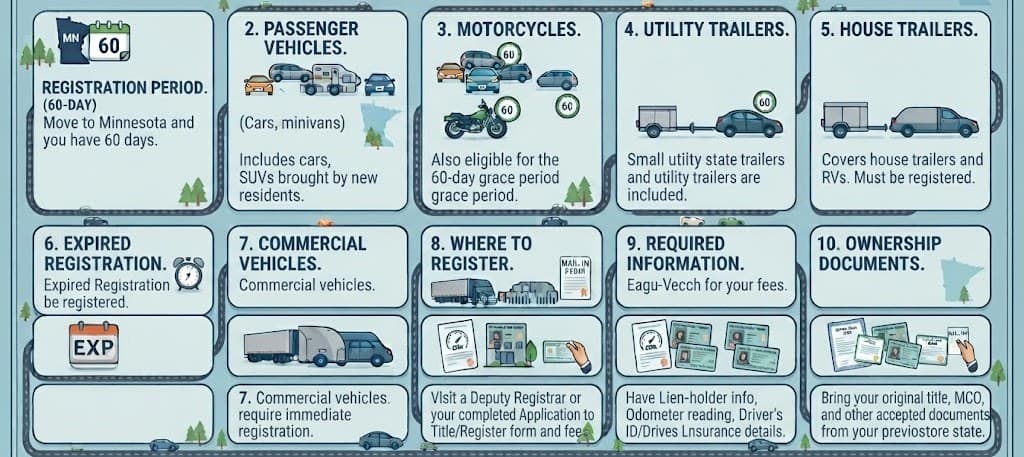
- 60-day registration period: If you recently moved to Minnesota, you have 60 days to register eligible vehicles in Minnesota.
- Passenger vehicles: The Minnesota 60-day period applies to passenger vehicles brought into the state by a new resident.
- Motorcycles: Motorcycles are also included among the vehicle types eligible for the 60-day new-resident registration period.
- Utility trailers: Utility trailers are included in Minnesota’s new-resident 60-day registration period.
- House trailers: House trailers are also listed on Minnesota’s official new-resident vehicle registration page.
- Expired registration: If the out-of-state vehicle registration has expired, the vehicle must be registered immediately rather than waiting 60 days.
- Commercial truck or trailer: Commercial trucks and commercial trailers require immediate registration and are not covered by the standard 60-day new-resident period.
- Where to register: According to Minnesota DPS, registration can be completed at a deputy registrar office. A completed Application to Title/Register a Vehicle form can also be mailed with the required fees.
- Required information: Vehicle registration may require lien-holder information, the current odometer reading, a driver’s license or acceptable identification, and insurance information, including the insurance company, policy number, and expiration date.
- Out-of-state vehicle documents: If a vehicle is brought to Minnesota from another U.S. state or jurisdiction, applicable ownership documents may include the current vehicle title, Manufacturer’s Certificate/Statement of Origin, or another ownership document accepted by Minnesota DPS.
New Resident Vehicle Registration Requirements
Minnesota New Resident Vehicle Registration Requirements cover the documents and vehicle details a new resident may need when registering an out-of-state vehicle. Minnesota DVS lists ownership documentation, identification, insurance information, odometer details, lienholder information, the registration application, and applicable fees among the information used during the registration process.
Before registering an out-of-state vehicle, prepare the following:
- Vehicle title: Current title or another ownership document accepted by Minnesota DVS.
- Out-of-state registration: Current registration card or applicable registration documentation from the previous state.
- Identification: Minnesota driver’s license or another acceptable form of identification.
- Proof of insurance: Insurance company name, policy number, and policy expiration date.
- Odometer reading: Current mileage or odometer information required on the application.
- Lienholder information: Lender or lienholder details for a financed vehicle.
- Registration application: Completed Application to Title/Register a Vehicle or applicable Minnesota registration form.
- Applicable fees: Registration, title, tax, and other fees that apply to the specific vehicle and transaction.
Out-of-State Title or Registration
- A vehicle title may be required to establish ownership.
- An out-of-state registration card provides current registration information for the vehicle.
- Minnesota DVS may accept a Manufacturer’s Certificate/Statement of Origin or another approved ownership document when applicable.
- The VIN on the vehicle should match the VIN shown on the title and registration documents.
- Leased, financed, or lien-recorded vehicles may require additional ownership information.
- The documents required can vary based on the vehicle’s ownership and registration situation.
Proof of Insurance
Minnesota registration requires current insurance information for the vehicle.
Applicants may need to provide:
- Insurance company name
- Policy number
- Policy expiration date
- Insurance information that applies to the vehicle being registered
Identification and Vehicle Information
New residents should have acceptable identification and accurate vehicle information available.
Registration paperwork may include:
- Driver’s license or acceptable ID
- Vehicle identification number (VIN)
- Current odometer reading
- Vehicle make, model, year, and other identifying information
- Information shown on the title or out-of-state registration
Lienholder or Financed Vehicle
A financed vehicle may have a lienholder, such as a bank, credit union, or other lender. If a lien is recorded against the vehicle, provide the applicable lender information when completing the Minnesota registration paperwork.
- Lienholder name
- Lienholder address, when required
- Existing lien information shown on ownership records
- Financing or ownership documents requested by Minnesota DVS
Pay Registration Fees and Taxes
Registration requires payment of the applicable fees. The amount can vary based on the vehicle and the transaction. When submitting the application, include the fees required by Minnesota DVS for the registration and title transaction. Before mailing paperwork or visiting an office, check the current Minnesota DVS fee information for the amount that applies to your vehicle. The official new-resident page specifically directs applicants to submit the appropriate fees with the application.
Receive Minnesota Registration and Plates
After Minnesota DVS processes the registration, the vehicle receives Minnesota registration documentation and the applicable Minnesota plates or plate-related materials. The submission method affects where you complete the transaction, but the registration itself is handled through Minnesota DVS and its authorized deputy registrar offices. Keep the Minnesota registration documentation with your vehicle and follow any instructions provided with the registration materials. For a new resident, completing the process within the applicable registration period helps keep the vehicle properly registered in Minnesota.
New Resident Registration Fees and Taxes
Minnesota New Resident Registration Fees and Taxes can include several separate charges depending on the vehicle, county, ownership situation, and type of transaction. For a new resident registering a passenger vehicle, the total may include registration tax, title and transfer fees, filing fees, plate fees, technology surcharges, wheelage tax, and applicable sales or use tax. Current Minnesota DVS materials should be checked before payment because some charges depend on the specific vehicle or transaction. The 2026 Minnesota Motor Vehicle Tax Manual provides the current tax information, while the DVS fee chart lists applicable title, filing, plate, and other transaction charges.
Registration Tax
The registration tax is calculated based on the vehicle and applicable Minnesota registration rules rather than being one flat amount for every passenger vehicle. Minnesota DVS states that the annual tax for a passenger-class vehicle can be determined through its Vehicle Registration Tax Estimator or by contacting a local deputy registrar. The 2026 Motor Vehicle Tax Manual states that registration tax is separate from license plate and filing fees. New residents should use the current DVS calculation method to determine the exact registration tax for their vehicle.
Title and Filing Fees
Current Minnesota DVS fee information lists several title and filing charges.
Fees include:
- Title/Transfer Fee: $8.25
- Title Technology Surcharge: $2.25
- State/Deputy Filing Fee: $12.00
- Expedited Processing: $20.00, when requested
- Lien-related fees: May apply when a lien is recorded or removed
Wheelage Tax and Other Charges
Wheelage tax is a separate county-based charge that applies in participating Minnesota counties to qualifying vehicles.
Other charges may include:
- License plate fees: Amount depends on the plate and transaction.
- Technology surcharge: $2.25 for applicable title transactions.
- Filing fee: $12.00 for applicable transactions.
- Sales or use tax: May apply depending on the vehicle transaction.
- Lien fee: May apply when a lien is recorded.
- Expedited processing: $20.00 when this optional service is requested.
Insurance Requirements for New Residents
Minnesota auto insurance is an important part of registering a vehicle after moving to the state. New residents should have current insurance information available when completing their vehicle registration paperwork. Minnesota DVS asks for details such as the insurance company, policy number, and expiration date. These details identify the insurance policy associated with the vehicle being registered.
Proof of Insurance for Vehicle Registration
When completing the registration application, provide the requested proof of insurance and policy information for the vehicle.
Keep the following details available:
- Insurance company name
- Policy number
- Policy expiration date
- Current insurance information for the vehicle
Insurance information is separate from proof of residency. Proof of insurance shows that the vehicle has the required insurance coverage, while proof of residency establishes that the applicant has a Minnesota address or residence. These documents serve different purposes during the registration process.
Special Cases for New Residents
Minnesota new resident vehicle registration can vary based on the type of vehicle and its ownership status. Motorcycles, trailers, commercial vehicles, leased vehicles, and vehicles with liens may require different information or documentation. An expired out-of-state registration can change the timing as well. These cases should be reviewed before submitting the registration application.
Motorcycle
Motorcycles are included among the vehicle types that new Minnesota residents may need to register after moving to the state. The application requires vehicle information, including the motorcycle engine number where applicable. Registration requirements, taxes, and plate charges can differ from passenger vehicles, so the motorcycle should be identified correctly on the application.
Utility or House Trailer
Utility and house trailers are covered by Minnesota’s new-resident registration rules. A utility trailer weighing 3,000 pounds or less can qualify for permanent registration, with a permanent registration sticker and card. House and other trailer types can have different registration classifications. The correct trailer type, weight, ownership documents, and applicable fees should be provided with the application.
Commercial Truck or Trailer
Commercial trucks and trailers can involve registration requirements based on vehicle class, weight, and use. Trucks and trailers registered on a gross-weight basis require the applicable registered weight information on the application. Commercial trailers over 3,000 pounds are classified according to Minnesota rules, with registration taxes based on gross weight. Commercial transactions may require additional information or processing.
Leased Vehicle
A leased vehicle has a different ownership arrangement from a vehicle owned outright. The Minnesota title and registration application asks whether the vehicle is leased and may require lessee information. For vehicles leased for more than 180 days, Minnesota’s application instructions specify that a Lessee Designation Form (PS2019) must be attached.
Vehicle With a Lien
A vehicle with a lien has a secured financial interest that must be reported during the title and registration process. The Minnesota application asks whether the vehicle is subject to security agreements and provides space for secured-party information. DVS title materials state that lien information can be recorded through the required title documentation or PS2000, depending on the vehicle.
Expired Out-of-State Registration
An expired out-of-state registration affects the timing of Minnesota registration. The Minnesota PS2000 application states that a vehicle brought into Minnesota by a nonresident must be registered within 60 days, but if the vehicle’s registration in the other state is not current, Minnesota registration is required immediately. New residents should address an expired registration without relying on the 60-day period.
New Resident Registration vs New Vehicle Registration
Minnesota new resident registration and personalized license plates are separate topics, but both can arise when someone moves to the state. A person who moves to Minnesota with a vehicle they already own generally follows the new-resident registration process. A person who purchases a vehicle after moving may instead need to complete a new title and registration transaction based on the purchase. Personalized license plates have separate eligibility, application, and fee requirements that apply when choosing a custom plate combination.
| Point | Minnesota New Resident Registration | New Vehicle Registration |
|---|---|---|
| Situation | Registering a vehicle already owned when moving to Minnesota | Registering a new or used vehicle purchased after moving to Minnesota |
| Vehicle Ownership | The vehicle is already owned by the new resident | Ownership is acquired through the vehicle purchase |
| Title | An out-of-state title and ownership documents may be required | Minnesota title and purchase documents may be required |
| Previous Registration | The vehicle is generally registered in another state | The vehicle is being registered after a new purchase |
| 60-Day Rule | Certain vehicles with valid out-of-state registration may have a 60-day period for Minnesota registration | A resident buyer may receive a separate 60-day temporary vehicle permit after purchasing a vehicle in Minnesota |
| Temporary Permit | The new-resident 60-day period is not the same as a temporary permit | The 60-day temporary permit gives a resident buyer time to register the purchased vehicle and pay applicable fees and taxes |
| Taxes & Fees | Registration tax, title fees, filing fees, and other applicable charges may apply | Title, registration, taxes, and applicable fees may apply to the purchase |
| Main Documents | Out-of-state title, registration or ownership documents, PS2000, and required vehicle information | Purchase documents, title information, PS2000 or applicable title paperwork, and tax information |
Frequently Asked Questions
Minnesota New Resident Vehicle Registration can raise questions about registration deadlines, out-of-state titles, expired registration, lender-held titles, and required documents. The questions below address issues new Minnesota residents may face when registering a vehicle after moving to the state. They can help clarify the 60-day registration period and explain how different ownership and registration situations may affect the required paperwork.
How long do new residents have to register a vehicle in Minnesota?
A new Minnesota resident generally has 60 days to register a qualifying vehicle brought into the state. The 60-day period applies when the vehicle has valid registration from another state. New residents should complete the Minnesota registration process within the applicable period and provide the required ownership, insurance, and vehicle information. The exact timing can differ for certain vehicle types and registration situations.
Is Minnesota vehicle registration really due within 60 days?
The 60-day period is a real Minnesota registration requirement for qualifying vehicles brought into the state by a new resident. This period should not be confused with a temporary permit issued for a vehicle purchase. If the vehicle’s out-of-state registration is no longer current, the Minnesota application states that the vehicle must be registered immediately rather than waiting for the 60-day period.
What happens if my out-of-state registration is expired?
An expired out-of-state registration changes the timing of Minnesota registration. The official PS2000 application states that a vehicle brought into Minnesota must be registered immediately if its registration in the other state is not current. A new resident should not rely on the standard 60-day period when the previous registration has already expired. The required ownership and registration documents should be submitted with the Minnesota application.
Do I need my original out-of-state title?
An out-of-state title may be required when Minnesota issues a new title for a vehicle previously titled in another state. The Minnesota PS2000 states that proper ownership or transfer documents, such as an out-of-state certificate of title, are required for a Minnesota title to be issued. If the vehicle has a special ownership situation, additional documentation may apply.
Can I register a vehicle if my lender has the title?
A vehicle can have a lender or other secured party listed as a lienholder. The Minnesota title and registration application includes information for security agreements and secured parties, so the lender holding the title does not automatically mean the vehicle cannot be registered. The registration transaction may require the applicable lienholder information and supporting ownership documentation.