License plates in Minnesota identify registered vehicles and play a key role in vehicle registration, renewal, transfers, and plate replacement. Drivers can find several plate categories based on vehicle type, personal preferences, military service, disability status, collector eligibility, or special causes. Minnesota plates may feature standard designs, personalized characters, specialty themes, or collector formats. Requirements can vary by vehicle and plate category, so checking current Minnesota Department of Public Safety Driver and Vehicle Services information can help confirm fees, forms, eligibility rules, and registration requirements before taking action.
License plates issued in Minnesota connect a vehicle with its state registration record and must meet state display requirements. Most covered motor vehicles need plates displayed in the required positions, and some plate types have separate eligibility rules or application forms. Vehicle owners can find information about standard plates, specialty plates, personalized options, veteran and military plates, disability plates, collector plates, temporary plates, replacements, and renewals. Minnesota registration services are handled through Driver and Vehicle Services and deputy registrar offices, with requirements and fees varying by transaction and plate type.
How to Get Minnesota License Plate
Minnesota License Plate registration begins with establishing vehicle ownership and completing the required vehicle registration process. Vehicle owners may need title documents, proof of ownership, identification, and applicable fees based on their situation. Minnesota DVS and deputy registrar offices handle vehicle registration and plate transactions. Once the required transaction is completed, the appropriate state-issued plate can be provided for the vehicle. Plate requirements can vary by vehicle type, registration category, and plate selection, so current DVS information should be checked before visiting an office.
- Minnesota DVS – Vehicle Title & Registration:
- https://dps.mn.gov/divisions/dvs/vehicle/title-registration
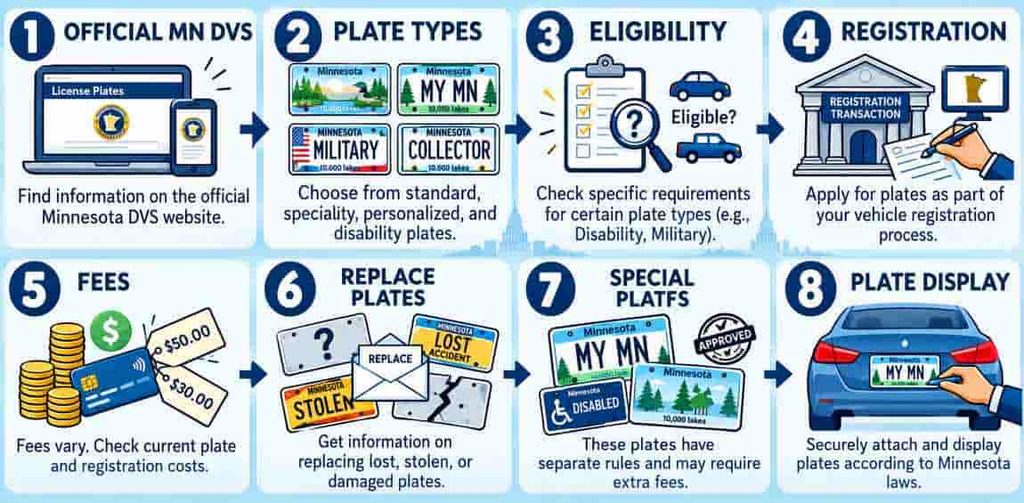
Official Information
The Minnesota DVS page provides official state information regarding available license plate options and associated requirements.
Plate Categories
Vehicle owners can explore standard, specialty, personalized, disability, military, collector, and alternative plate options based on eligibility.
Eligibility Rules
Certain plate types carry specific requirements. Always check current DVS criteria before making your final selection.
Application Process
Plates are requested as part of your vehicle registration transaction through the Minnesota DVS or an authorized deputy registrar office.
Fees & Costs
Fees vary based on the specific plate type and registration category. Verify exact current costs directly via Minnesota DVS resources.
Replacements
Comprehensive guidelines and procedures for replacing lost, stolen, damaged, or otherwise unusable plates are readily accessible.
Specialty & Custom
Personalized and specialty plates feature distinct criteria, unique eligibility regulations, and separate fee structures.
Proper Display
Once received, plates must be securely mounted and visibly displayed in strict compliance with Minnesota vehicle standards.
Minnesota License Plate Types
Seven plate types, what each one is for, and who it suits.
Temporary plates
A short-term paper plate that lets you drive a newly bought vehicle legally while the permanent registration is processed.
- For New vehicle buyers
- Lasts A short, limited period
- Shown On the rear of the vehicle
Specialty plates
Special-design plates that show support for a cause, organization, college, or interest. A contribution or extra fee usually applies.
- For Supporters and fans
- Look Custom artwork and themes
- Extra Added fee or donation
Personalized plates
Pick your own letters and numbers: a name, a word, or a short message. Combinations must be available and pass content rules.
- For Anyone wanting a unique plate
- Check Availability first
- Rule No offensive text
Disability plates
For people with a qualifying disability. They allow use of designated accessible parking spaces.
- For Qualifying drivers or passengers
- Need Medical certification
- Perk Accessible parking
Commercial plates
For trucks and vehicles used for business. The plate class usually depends on the vehicle’s weight and how it is used.
- For Businesses and fleets
- Based on Weight and use
- Types Trucks, vans, trailers
Veteran & military plates
Plates that honor service. Available to eligible veterans, active-duty members, and recipients of certain military honors.
- For Veterans and service members
- Need Proof of service
- Styles Branch and honor designs
Black plate
A dark-themed plate design for drivers who want a sleek, modern look. Availability and fees are set by Minnesota DVS.
- For Style-minded drivers
- Look Black base, light lettering
- Check Current rules and fees
- Complete vehicle purchase or registration transaction.
- Ensure temporary operating permit/plates are issued.
- Attach securely to the designated vehicle areas.
- Wait for permanent plates to arrive by mail.
- Browse available cause designs.
- Choose sequential or personalized characters.
- Submit application online or mail to Sacramento.
- Pay initial surcharge and annual renewal fees.
- Access the online plate configurator tool.
- Check availability for desired character combinations.
- Ensure text complies with content guidelines.
- Complete application and pay the required fee.
- Have a qualified medical professional sign application.
- Complete the specific disability parking form.
- Submit documents directly to the DMV.
- Receive DP/DV plates or placards by mail.
- Determine vehicle weight and commercial use category.
- Complete commercial vehicle registration paperwork.
- Provide proof of weight certification if required.
- Pay applicable commercial registration fees.
- Select the authentic legacy vintage black plate option.
- Verify vehicle type eligibility for the design.
- Submit order via online portal or registration form.
- Pay legacy plate manufacturing fees.
- Select your military branch or medal category.
- Obtain service certification or DD-214 documents.
- Fill out the dedicated military plate application form.
- Submit verified forms and applicable fees to DMV.
License Plate Requirements
Minnesota License Plate Requirements cover vehicle registration, the number of plates required, proper plate display, and registration tab placement. Most covered motor vehicles must display both a front license plate and a rear license plate. Minnesota law has exceptions for certain vehicle classes, so the required plate setup can depend on the type of vehicle and registration.
Key requirements include:
- Current vehicle registration: The vehicle must have valid registration when Minnesota law requires registration for operation on public roads.
- Number of plates: Most covered motor vehicles require two plates, while certain vehicles have different requirements.
- Front and rear display: Vehicles requiring two plates must display one plate at the front and one at the rear.
- Secure mounting: Plates must be securely attached to the vehicle.
- Upright position: Plates should be displayed in the required upright and horizontal position.
- Clear visibility: Plate numbers, letters, and other required identifying information must remain visible.
- No obstruction: Frames, covers, accessories, or other materials must not block required plate information.
- Registration tabs: Required registration tabs must be displayed according to Minnesota requirements.
- Expired registration: Having physical plates on the vehicle does not make an expired registration valid. Required registration must be renewed before operating the vehicle when current registration is required.
Does Require a Front License Plate?
Yes, Minnesota generally requires a front license plate and a rear license plate for motor vehicles that are required to display two plates. The front license plate is mounted at the front of the vehicle, while the rear license plate is displayed at the rear. Certain vehicle classes have exceptions to the two-plate rule.
For most covered vehicles, drivers should check that:
- A front plate is properly mounted.
- A rear plate is properly mounted.
- Both plates remain visible.
- Plate numbers and letters are unobstructed.
- Plates remain securely attached while the vehicle is being operated.
How Many License Plates Does a Vehicle Need?
Most covered motor vehicles in Minnesota need two license plates.
- One front license plate
- One rear license plate
Certain vehicle classes are exceptions. Motorcycles and trailers, for example, have different plate requirements from standard passenger vehicles. Some collector-related registrations can have specific display provisions.
How Should a Plate Be Displayed?
Proper plate display is part of Minnesota law. When two plates are required, they should be placed at the front and rear locations assigned for the vehicle.
Follow these basic display requirements:
- Mount each plate securely to the vehicle.
- Keep the plate upright and in the required horizontal position.
- Keep letters, numbers, and identifying information clearly visible.
- Do not use a frame or cover that blocks required information.
- Display required registration tabs correctly.
- Keep the plates attached while the vehicle is being operated.
- Maintain current vehicle registration and renew it when required.
What Does a Minnesota License Plate Look Like?
A Minnesota License Plate uses a recognizable standard design associated with the state’s identity and natural scenery. The current standard passenger plate is linked to the 2008 design series and features a primarily white background with blue lettering and design elements. The phrase “10,000 Lakes” is displayed on the plate, reflecting Minnesota’s well-known connection with its lakes and waterways.
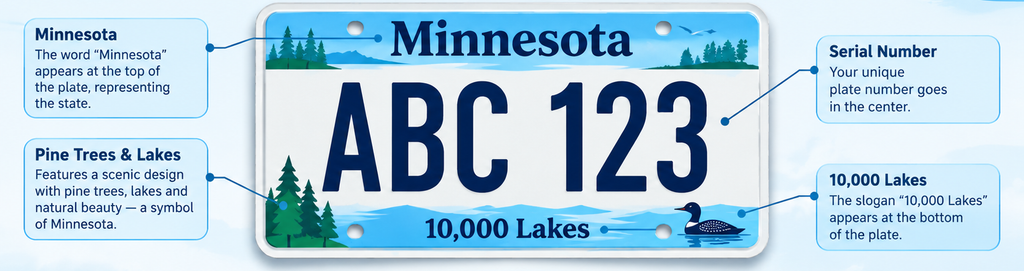
Minnesota Imagery and Plate Number
The Minnesota state license plate includes imagery connected with the state’s natural character, along with a unique plate number. The combination of letters and numbers identifies the specific registration assigned to the vehicle. The standard design is used for eligible passenger vehicles that do not have a specialty, personalized, or other designated plate.
Standard Minnesota Plate Size
A standard Minnesota plate follows the common U.S. passenger vehicle plate dimensions. The plate measures approximately 12 inches wide and 6 inches high. This size allows the plate to fit standard vehicle mounting areas and provides enough space for the registration number, state identification, design elements, and required registration information.
Registration Tabs on a Minnesota Plate
Registration tabs are displayed on designated areas of the Minnesota plate to show the vehicle’s current registration period. When registration is renewed, the applicable tab is updated according to Minnesota requirements. The physical plate and registration status work together to identify whether the vehicle has current registration.
Plate Material and Design
A Minnesota License Plate is made for regular outdoor vehicle use and road conditions. The standard plate combines durable construction with clearly visible letters, numbers, and graphic elements. Specialty, personalized, military, disability, and collector plates can have different designs, colors, or eligibility requirements from the standard passenger plate.
How the Standard Plate Differs From Older Designs
Minnesota license plates have changed through different periods, with earlier designs using different colors, graphics, slogans, and numbering formats. The current standard series reflects a more modern design while retaining the “10,000 Lakes” identity associated with Minnesota. Historical plate designs can help show how Minnesota’s state-issued plates have developed over time.
Minnesota License Plate Fees
Minnesota License Plate Fees vary based on the plate type, vehicle category, registration transaction, and whether the plate is new or a replacement. The plate fee is separate from the vehicle’s registration fee, filing fee, and any annual contribution connected with certain specialty plates. Current DVS fee schedules should be checked before completing a transaction, since charges can change.
| Fee Type | Current Fee | Details |
|---|---|---|
| Standard Double Plates | $15.50 | Standard passenger vehicle plates issued as a pair |
| Standard Single Plate | $13.50 | Applies only to vehicles eligible for a single plate |
| Motorcycle / Moped Plate | $13.50 | Plate fee for motorcycles and mopeds |
| Truck Double Plates | $15.50 | Standard double plate fee |
| Truck Single Plate | $13.50 | Single plate where permitted |
| Personalized Plate Fee | $100 | Additional fee for personalized plates |
| Special Plate Transfer Fee | $5 | Applies when transferring a special plate to another vehicle |
| Duplicate Registration Sticker | $1.50 | Replacement registration sticker |
| Duplicate Double Plates | $15.50 | Passenger or truck replacement plates |
| Duplicate Single Plate | $13.50 | Passenger or truck replacement plate |
| Registration Filing Fee – Renewal | $8 | Due with each registration renewal |
| Filing Fee – Special/Duplicate/Temporary Transactions | $12 | Applies to specified transactions |
| Registration Technology Surcharge | $2.25 | Registration-related surcharge |
| Special Plate Contribution | Varies | Amount depends on the specific specialty plate |
Replacing a Minnesota License Plate
A Minnesota license plate replacement may be needed when a plate is lost, stolen, damaged, or no longer usable. The replacement process is different from registration renewal. Renewal keeps the vehicle registration current, while a replacement plate provides a new physical plate when the existing one cannot be used. Minnesota DVS and deputy registrar offices handle applicable plate replacement transactions.
When a Plate Needs Replacement
A Minnesota plate may need replacement when it is lost, stolen, damaged, or no longer readable. The required process can vary based on the reason for replacement and the vehicle’s registration type. DVS or a deputy registrar can provide the applicable replacement requirements, documentation, and fees.
A Minnesota plate may need replacement in several situations:
- Lost plate: A missing plate can be replaced through the applicable DVS process.
- Stolen plate: A stolen plate should be reported as appropriate, with replacement handled through DVS or a deputy registrar.
- Damaged plate: A plate that is damaged or difficult to read may require replacement.
- Replacement sticker: If the registration sticker is lost or damaged, a replacement sticker may be available instead of replacing the entire plate.
- Duplicate plate: A duplicate plate may be requested when an additional or replacement plate is permitted for the vehicle.
Replacement Process and Documentation
The exact requirements can depend on why the plate is being replaced and the type of registration. Vehicle owners may need their registration card, vehicle information, identification, and other documentation requested for the transaction. DVS or a deputy registrar can provide the applicable requirements for the specific replacement.
Replacement Fees
A replacement fee applies to many plate replacement transactions. The amount depends on the plate type and transaction. A replacement plate fee is separate from the vehicle’s registration fee and should not be confused with registration renewal costs.
Plate Transfer
A Minnesota License Plate transfer refers to moving an existing plate from one vehicle to another when Minnesota rules allow that transaction. A plate is connected with a vehicle registration, so selling or replacing a vehicle can affect how the plate and registration are handled. The rules are different for ordinary plates, special plates, and personalized plates, so a plate should not be assumed to transfer automatically in every situation.
What Happens When a Vehicle Is Sold?
When a vehicle is sold, the title and vehicle registration records need to be updated according to the transaction. The plate may be handled differently depending on its type and whether the owner is transferring it to another eligible vehicle.
Transferring a Plate to Another Vehicle
An owner may be able to move a plate to another vehicle when the plate and the new vehicle meet Minnesota’s requirements. The transaction can involve updating registration information and completing the required title or registration paperwork.
Special and Personalized Plate Transfers
A special plate or personalized plate can have additional transfer rules. Eligibility, plate type, and the relationship between the owner and vehicle can affect whether the plate can be transferred. DVS or a deputy registrar can provide the requirements for a specific plate transfer transaction.
Title and Registration Changes
A plate transfer does not replace the need to properly update title and registration records. The applicable transaction determines which documents, fees, and registration changes are required.
Personalized and Custom Plates
A personalized plate allows an eligible vehicle owner to request a custom combination of letters, numbers, or approved characters instead of a standard assigned plate number. A custom Minnesota plate may be available with certain standard and specialty backgrounds, with character limits, eligibility rules, and fees varying by plate type and vehicle category.
Personalized Plate Character Limits
Character limits depend on the selected plate background and vehicle type. Before submitting a personalized plate request, check the current Minnesota DVS requirements for the specific design.
- Passenger and other vehicle categories can have different character limits.
- Motorcycle plates can have different limits from passenger plates.
- Specialty backgrounds can have their own character restrictions.
- Spaces and certain symbols may be treated differently from letters and numbers.
Standard and Specialty Plate Backgrounds
Personalized MN license plates may be available with standard backgrounds and selected specialty plate designs.
- Standard background: A personalized combination is displayed on an eligible standard plate.
- Specialty background: Some specialty plates allow personalization, subject to their own eligibility rules.
- Vehicle eligibility: The vehicle category can affect which personalized backgrounds are available.
Personalized Plate Fees
A personalized Minnesota plate can have an additional fee beyond regular vehicle registration costs.
- Personalized plate fee applies separately from registration charges.
- Specialty plates can include additional annual contributions.
- Replacement or transfer transactions can involve separate fees.
- Current DVS fee schedules should be checked before completing a transaction.
Approval and Restrictions
A requested plate combination must meet Minnesota DVS requirements before it can be issued.
- Some combinations may already be assigned or unavailable.
- Offensive, misleading, or prohibited combinations can be rejected.
- Approval depends on the applicable DVS rules and the selected plate type.
- Meeting the character limit does not automatically mean a requested combination will be approved.
Renewal and Continued Use
A personalized Minnesota plate remains connected with the applicable vehicle registration and must be renewed as required. Registration renewal and personalized or specialty plate charges can be separate costs. Current DVS requirements should be checked at renewal since fees, available designs, and plate rules can change.
Specialty License Plates
Minnesota License Plates include a wide range of specialty plates created for specific groups, causes, organizations, and vehicle categories. These special license plates can have different eligibility rules, fees, annual contributions, designs, and character limits. The available options depend on the vehicle and the plate category selected.
Veteran and Military Plates
Veteran and military plates recognize qualifying military service and can be available to eligible service members or veterans. Some designs require documentation or proof of eligibility. Different military backgrounds can have their own requirements and fees.
Disability Plates
Disability plates are available for qualifying individuals who meet Minnesota’s disability-related requirements. These plates provide designated parking privileges when the applicable eligibility requirements are met. Required documentation and application procedures depend on the specific disability plate or permit.
Organizational and Collegiate Plates
Organizational and collegiate plates support participating organizations, educational institutions, or related programs. These Minnesota plate types can feature distinctive logos, colors, or symbols. Some may include an additional annual contribution beyond standard registration and plate charges.
Critical Habitat and Environmental Plates
Critical Habitat and other environmental plates support designated conservation-related programs. These plates use specialized designs and can include an additional contribution associated with the selected plate.
Blackout and Other Special Designs
Blackout and other special designs provide visual alternatives to standard plates. Availability, personalization options, fees, and eligibility can vary by design. Current DVS information should be checked for the specific plate.
Collector, Classic, Pioneer, and Street Rod Plates
Collector, classic, pioneer, and street rod plates are intended for qualifying older or specially classified vehicles. Eligibility can depend on vehicle age, use, registration category, and other requirements. These plates can have specific display rules, fees, and character limits that differ from standard passenger plates.
Minnesota License Plate History
The Minnesota plate history goes back to the early 1900s, when vehicle registration was becoming part of state transportation records. Minnesota later moved from early owner or locally identified plates to standardized state-issued plates. The Minnesota state license plate has changed in appearance, materials, colors, and serial formats across different periods.
Early License Plates
Minnesota’s early vehicle registration period helped establish the need for identifying plates.
- Vehicle registration began in the early 1900s.
- Minnesota state-issued license plates began in 1909.
- Early plates used designs and materials that differed from modern plates.
- Plate numbers served as identifiers for registered vehicles.
Changes in Plate Design
The Minnesota license plate design changed several times as the state updated its plate system.
- Early plates used simple layouts with limited graphics.
- Letter and number combinations changed as registration numbers increased.
- Different colors, backgrounds, borders, and lettering styles appeared across historical plate series.
- Serial formats became more consistent as the state moved toward standardized production.
1950s Standardization
The 1950s marked an important period in Minnesota plate history.
- Plate production became more standardized.
- Passenger plates followed more consistent size and format requirements.
- Serial numbering became easier to organize across larger numbers of registered vehicles.
- Later plate designs continued to build on this standardized system.
Modern License Plate Design
Modern Minnesota plates use a standardized appearance with clearly displayed registration characters.
- The standard passenger plate uses the state’s familiar “10,000 Lakes” theme.
- The plate number remains the primary identifying sequence.
- Specialty and personalized plates use different designs and character arrangements.
- Current designs reflect the state’s modern registration system while retaining recognizable Minnesota themes.
Frequently Asked Questions
Minnesota License Plate questions often cover plate requirements, costs, renewal periods, front and rear plate rules, and standard plate designs. The answers below provide concise information about Minnesota license plate topics, including how many plates a vehicle may need, typical plate fees, and registration renewal requirements.
Does Minnesota Require Two License Plates?
Minnesota generally requires two license plates on motor vehicles that are issued two plates. One plate is displayed on the front and one on the rear. Certain vehicle types, such as motorcycles, may receive a single plate based on their registration class.
Does Minnesota Require a Front License Plate?
Minnesota law generally requires a front license plate for vehicles that are required to display two plates. The front plate must be securely mounted in the required position and remain clearly visible. Exceptions can apply to certain vehicle types or registration categories.
What Is the Standard Minnesota License Plate?
The standard Minnesota license plate is the regular passenger plate issued for eligible vehicles. It uses a white background with blue lettering and features the state’s “10,000 Lakes” theme. Specialty, personalized, military, disability, and other plate types can have different designs, fees, and eligibility requirements.
How Much Does a Minnesota License Plate Cost?
The cost of a Minnesota license plate depends on the plate type and vehicle registration transaction. A standard double plate costs $15.50, while a standard single plate or motorcycle plate costs $13.50. A personalized plate has a $100 personalized plate fee, and a special plate transfer has a $5 fee. Registration taxes, filing fees, and contributions for certain specialty plates may be charged separately.
How Often Do Minnesota License Plates Need to Be Renewed?
Minnesota vehicle registration is generally renewed annually. The renewal period is tied to the vehicle’s registration record rather than the physical plate itself. Registration tabs are issued with renewal and must be displayed as required. A vehicle with expired registration is not considered current simply because its physical license plates remain attached.