
Minnesota License Plate designs reflect more than vehicle identification; they show changes in state symbols, colors, slogans, numbering formats, and production methods across decades. From early plates issued during the first years of automobile registration to modern standard and specialty plates, each design carries details tied to Minnesota’s transportation history. This page covers major plate styles, notable design changes, historical milestones, serial formats, and recognizable features. Readers can compare older Minnesota license plates with current versions and see how state-issued plates have changed over time.
Minnesota License Plate history includes a long record of changing colors, graphics, slogans, materials, and registration formats. Early Minnesota plates looked very different from the plates seen on vehicles today, with later designs introducing standardized production and stronger visual identification. Historical plate examples can reveal the period in which a vehicle was registered, plus changes in state branding and plate numbering. This section examines important Minnesota plate designs, memorable historical periods, and the features that help distinguish older plates from current Minnesota registrations.
Minnesota License Plate Designs Current Appearance
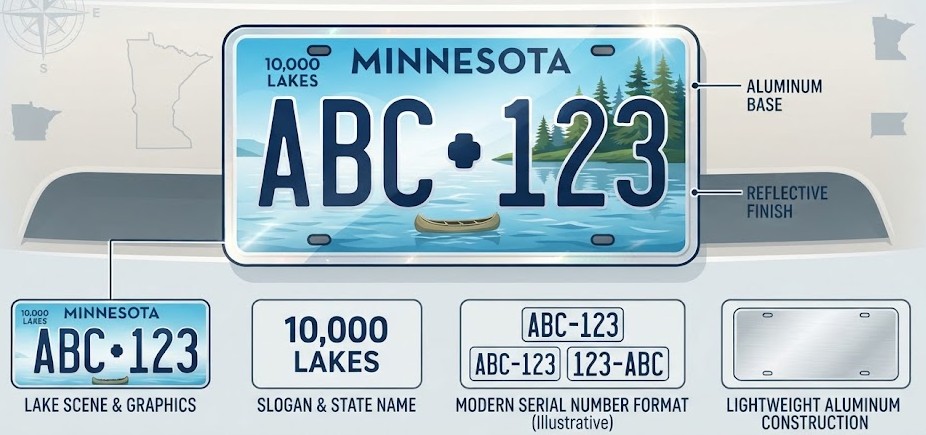
The current Minnesota License Plate Designs continue the state’s recognizable scenic plate style. The standard passenger plate combines a reflective aluminum base, lake-themed graphics, the state name, the “10,000 LAKES” slogan, and a registration serial number. These elements create the modern plate appearance while maintaining visual links with earlier Minnesota scenic plates.
Current License Plate Design
The standard passenger plate includes several identifiable features:
- Base material: Aluminum construction
- Plate size: 12 × 6 inches
- Background: Reflective surface
- Graphics: Lake, sky, island, trees, and canoe imagery
- State name: Minnesota identification displayed on the plate
- Slogan: “10,000 LAKES”
- Serial number: Registration characters displayed prominently
Standard Passenger Plate Size and Material
The current standard plate uses a 12 × 6 inch rectangular format and an aluminum base. This lightweight material differs from many older Minnesota plates that were produced from steel. The reflective surface is another characteristic that separates modern plates from several historical issues.
- Aluminum construction
- 12 × 6 inch passenger plate format
- Reflective background
- Lightweight compared with older steel plates
- Modern production construction
Lake Scene and Graphics
The scenic graphics remain a major part of the current plate appearance. The background continues the visual theme introduced with the scenic plate designs of the late 20th century.
- Lake and water scene
- Blue-toned sky
- Island
- Trees
- Canoe graphic
- Scenic background surrounding the registration characters
State Name and “10,000 LAKES” Slogan
The state name and “10,000 LAKES” slogan connect the current plate with Minnesota’s longer plate history. The slogan has appeared on Minnesota standard plates since 1950 and continued through later scenic versions.
- “Minnesota” identifies the issuing state
- “10,000 LAKES” remains a recognizable slogan
- Wording forms part of the standard plate layout
- Placement works alongside the scenic background
Modern Serial Number Format
The serial number identifies the registered vehicle and remains one of the most prominent plate elements. Current references identify formats such as ABC-123 and 123-ABC, depending on the issuing sequence.
- Letter-and-number combinations
- Different sequences can appear over time
- Special plates can use different serial arrangements
- Personalized plates follow separate character requirements
Overall Current Plate Appearance
The current standard plate brings together the main elements of modern Minnesota License Plate Designs.
- Material: Aluminum
- Size: 12 × 6 inches
- Finish: Reflective
- Graphics: Minnesota lake scene
- Slogan: “10,000 LAKES”
- Identification: Minnesota state name
- Registration: Serial number
License Plates History Before 1909
Minnesota License Plate History reaches back to the early automobile period, before the state produced a uniform license plate for registered vehicles. Minnesota began registering motor vehicles in 1903, creating an official system for identifying automobiles on public roads. During these early years, motorists did not yet receive the standardized state-issued plates associated with later Minnesota registration. Local practices and owner-provided identification were used before statewide plate production began in 1909. These historical plates provide useful context for how Minnesota’s vehicle identification system developed.
Minnesota Vehicle Registration Begins in 1903
Minnesota started motor-vehicle registration in 1903, marking an early step in creating statewide records for automobiles. Registration provided a way to associate vehicles with their owners and distinguish automobiles operating on public roads. At this stage, Minnesota had not yet adopted the standardized plate format that became familiar after 1909. Early registration practices reflected the limited number of automobiles and the developing nature of motor-vehicle laws.
Locally Issued and Owner-Provided Plates
Before uniform state issuance, historical plates could be produced or identified through local and owner-related systems. Vehicle owners could display identification numbers on their automobiles as part of vehicle registration rather than receiving the standardized state plate format introduced later. These early examples can differ considerably in material, numbering, size, and appearance. Surviving historical plates are useful records of this transitional period in Minnesota vehicle registration.
Minneapolis and St. Paul Plates Before State Issuance
Minneapolis and St. Paul had their own local approaches to vehicle identification before Minnesota introduced statewide plates. Early automobile owners in these cities could encounter municipal registration requirements and locally associated plate numbers. This produced differences between plates used in major cities and those connected with later state registration. In 1909, Minnesota moved to state-issued plates, creating a more consistent identification system and marking a major stage in Minnesota License Plates History.
Plate Designs From 1909 to 1954
The early period of Minnesota License Plates History shows a strong pattern of annual changes in colors, materials, lettering, and serial number formats. Minnesota began state-issued plates in 1909, replacing the earlier owner-provided and locally associated identification systems. From 1909 through the 1950s, plate appearance changed frequently, with combinations including orange, black, blue, silver, cream, green, maroon, and other shades. This period provides a clear record of Minnesota’s plate evolution before later designs adopted more consistent visual themes.
First State-Issued Plate in 1909
Minnesota’s first state-issued passenger plate appeared in 1909. It used a flat metal plate with a silver serial number on an orange background. The word “MINN” appeared vertically along the left side, with “1909” positioned vertically on the right. The serial number used a simple numerical format, beginning with number 1. This first statewide design established the basic concept of displaying a registration number together with the state abbreviation and year
Early Colors and Materials
The plate colors changed quickly during the first years. The 1910 plate used a black background with metallic-gold characters, followed by a dark-blue porcelain plate with white characters in 1911. Silver backgrounds with black serial numbers appeared from 1912 through 1914, followed by red-on-silver combinations from 1915 through 1917. Minnesota later used embossed white characters on black plate from 1918 through 1920. These changes show how varied early historical plates could be from one registration year to another.
1910s and 1920s Plate Appearance
During the 1920s, Minnesota continued changing its plate colors and identification formats. The 1921 plate used black characters on light blue and introduced letter prefixes connected with vehicle weight classes. The 1922 plate used black characters on an off-white background. Other combinations during the decade included maroon and gray, white and dark blue, black and silver, white and black, light green and dark green, and black and tan. Serial number formats became more structured as registration requirements developed.
1930s and 1940s Designs
The 1930s continued the annual color changes, with combinations such as silver and black, black and yellow, white and dark blue, and black and silver. By 1940, Minnesota used embossed white serial numbers on black plates with a border. The following years alternated among black-and-silver, red-and-cream, white-and-blue, and other combinations. World War II affected the 1942–43 issue: the 1942 base was revalidated for 1943 using tabs, reducing the need for additional metal production.
1949 Territorial Centennial Plate
The 1949 historical plate marked the centennial of the creation of the Minnesota Territory. It used an embossed black serial number on a waffle-textured silver plate, with “MINNESOTA” centered at the top. The bottom displayed “1849 – CENTENNIAL – 1949,” connecting the registration plate with the state’s territorial history. This special annual design came immediately before the introduction of Minnesota’s long-running “10,000 LAKES” slogan.
1950 and the “10,000 LAKES” Slogan
The 1950 plate introduced “10,000 LAKES” for the first time as a standard Minnesota plate slogan. The wording appeared at the top, while the plate used a black background with white embossed serial numbers and “19 MINNESOTA 50” at the bottom. The slogan continued on subsequent annual plates, with 1951 using black characters on silver, 1952 using blue on gold, and later years returning to other color combinations. This period marks an important stage in Minnesota License Plates History, linking plate appearance with a recognizable state identity.
Plate Design Evolution From 1955 to 1977
The plate evolution from 1955 through 1977 marked a transition from annual embossed metal issues to more standardized, reflective plates. The period retained the “10,000 LAKES” slogan introduced in 1950, yet the plate colors, serial format, lettering placement, and materials changed several times. Minnesota’s 1955 issue was the first state plate to follow the 6-by-12-inch dimensions that became the standard size for passenger vehicle plates. By the 1970s, reflective backgrounds had become a defining feature, setting the stage for the scenic graphic design introduced in 1978.
Standardized Plate Dimensions
The 1955 Minnesota plate was the first issue to comply with the standardized 6-by-12-inch passenger vehicle dimensions. The standard included mounting-hole specifications, creating greater consistency between plates and vehicles across jurisdictions. Minnesota retained the familiar embossed construction, yet the standardized size gave later plate designs a consistent physical format. This change is an important point in Minnesota License Plate History, since earlier plates could differ in dimensions and production characteristics.
Reflective Plate Materials
Reflective material became part of Minnesota’s passenger plate production beginning with the 1956 issue. The 1956–57 plate used a reflective white background with green embossed characters, followed by blue characters on the 1958–59 issue. Reflective backgrounds continued through much of the following decades. The material made the plate more visible under illumination and gave the white-background issues a distinct appearance compared with earlier solid-color plates.
Changing Colors and Serial Formats
Minnesota continued changing plate colors and serial formats without abandoning the basic embossed-metal appearance. The 1960s included black, maroon, green, and blue serial treatments on reflective white backgrounds. Serial formats changed from combinations such as a number followed by letters and digits to patterns using three letters and three numbers. In 1974, orange characters appeared on a reflective white plate with an AB 1234 format. The 1977 issue then shifted to blue characters and an ABC 123 serial format.
The Road to the 1978 Graphic Design
By the mid-1970s, Minnesota’s plate appearance had become more consistent in its use of reflective white backgrounds, contrasting embossed serials, borders, and the “10,000 LAKES” slogan. The 1977 plate retained this simpler format but moved “MINNESOTA” to the top and placed the slogan at the bottom. The following year’s redesign changed the visual approach substantially: the 1978 plate introduced a reflective lake scene with water, sky, trees, an island, and a canoe. This former plate style became the foundation for Minnesota’s long-running scenic passenger plate format.
The 1978 License Plate Design
The 1978 MN License Plate Designs marked a major change in Minnesota’s plate evolution. Earlier passenger plates relied mainly on embossed characters, borders, changing plate colors, and the “10,000 LAKES” slogan. The 1978 issue introduced a scenic graphic background showing water, sky, an island, trees, and a small canoe. The serial number remained prominent, yet the surrounding artwork gave the plate a much more recognizable visual identity. This base was issued from 1978 through 1982 and became the foundation for later versions of the scenic Minnesota plate.
Introduction of the Canoe and Lake Graphic
The 1978 plate replacement the relatively plain reflective format with a printed lake scene. Its background included pale blue and white water, a pale blue sky, a green island with trees, and a small green canoe. Blue embossed serial characters appeared over the graphic background, while “Minnesota” was screened near the top. This canoe graphic connected the plate’s visual appearance with the state’s extensive lake environment and created a clear departure from the mostly text-based plates used before 1978.
State Outline as a Serial Separator
The original 1978–1982 version used a conventional ABC 123 serial format without the state outline separating the letter and number groups. The Minnesota-shaped separator appeared with the next version of the scenic base, beginning in 1982. That change kept the same basic lake-scene concept but incorporated a recognizable state symbol directly into the registration number layout. The separator became another visual element associated with this period of Minnesota plate design.
“10,000 lakes” on the New Graphic Base
The “10,000 lakes” slogan remained part of the new design, but its presentation changed. On the 1978 plate, the wording was screened in blue near the bottom rather than embossed in the upper portion of a plain plate. The lowercase treatment and scenic background gave the slogan a more integrated appearance. The phrase had already appeared on Minnesota standard plates since 1950, so the 1978 redesign carried an established element into a new visual format.
Why the 1978 Design Became Important to Plates
The 1978 design established a scenic base that remained recognizable through later plate changes. Subsequent versions modified colors, serial arrangements, typography, and other details, yet the lake, island, trees, and canoe composition remained central to the design family. The shift showed how graphics could become a major part of plate identification rather than serving as a minor decoration. For Minnesota License Plate History, 1978 is a key point in the transition from annual text-and-color variations to a recognizable multi-year graphic plate.
Plate Designs From 1987 to 2008
The MN License Plates Designs used from 1987 through 2008 retained the scenic concept introduced in 1978, yet the base artwork, plate colors, materials, and serial arrangement changed over time. Rather than replacing the lake theme altogether, Minnesota made several updates to the existing scenic format. The period included the addition of “EXPLORE,” adjustments to the lake and sky background, a transition from steel to aluminum, and multiple serial-format changes. These updates gradually shaped the current design while preserving recognizable elements from the former plate.
Addition of “EXPLORE”
A major wording change appeared with the 1987 issue, which added “EXPLORE” to the scenic base. The word appeared at the top of the plate, above the existing Minnesota identification and lake artwork. The design retained the familiar water, island, trees, and canoe composition. This meant the plate could receive new wording without abandoning the graphic concept established in 1978. The slogan helped distinguish this version from earlier scenic plates while maintaining continuity in Minnesota’s plate appearance.
Changes in Graphic Colors
The scenic artwork received several color adjustments during this period. Earlier versions used relatively subdued blues and greens, while later issues modified the tones used for the sky, water, trees, island, and canoe. These changes affected the overall appearance without removing the central lake scene. Plate colors were therefore part of an ongoing visual update rather than a complete redesign. The scenic base remained the defining feature across multiple production periods.
1990s Water and Background Changes
During the 1990s, Minnesota modified the water and background portions of the scenic design. The updated lake background changed the balance between the sky, water, island, and foreground elements. These adjustments produced a somewhat different appearance from the original 1978 base, even though the core graphics remained recognizable. The revisions show how Minnesota continued refining its scenic plate rather than introducing an unrelated visual concept.
Steel to Aluminum
Plate material changed during this period as Minnesota moved from steel production to aluminum. The material transition affected the physical construction of the plates while the scenic artwork remained largely consistent. Aluminum offered a different manufacturing base for the plate and became associated with later Minnesota issues. This change is useful when comparing surviving former plates, since material can help distinguish different production periods.
Serial Format Changes
The serial arrangement changed alongside the scenic artwork and material updates. Minnesota used different combinations of letters and numbers as registration sequences progressed, including formats with letter groups followed by numerical characters. Later issues continued adapting the serial sequence as available combinations were used. These changes allowed registration numbers to progress without requiring a complete redesign of the scenic base. By 2008, Minnesota’s plate format had retained its recognizable graphics while incorporating updated serial arrangements and production characteristics.
Plate Designs From 2009 to Today
Minnesota License Plate Designs from 2009 onward continued the scenic format that had developed from the 1978 redesign, with refinements to typography, serial numbers, and the presentation of the state name. The 2009 issue added “.com” to the existing “Explore Minnesota” treatment, creating the “Explore Minnesota.com” wording. A further design phase began in September 2017. The modern plate continues the lake-and-sky concept associated with Minnesota’s long-running passenger plate design, while its serial arrangement has changed as registration sequences have progressed.
The “ExploreMinnesota.com” Version
From June 2009 through September 2017, Minnesota used a scenic base that retained the earlier lake, island, trees, and canoe graphics. The major wording change was the addition of “.com” to the state-name treatment, producing “Explore Minnesota.com.” The plate retained the screened “10,000 lakes” wording at the bottom and continued using a dark blue state-shaped separator between portions of the serial. This version represents a continuation of the earlier scenic base rather than a complete replacement of the graphic concept.
2017 Design Phase
A new phase began in September 2017. The scenic concept continued, yet the plate entered a newer production and serial-number period. Minnesota’s current standard passenger plate remains visually connected to the scenic designs developed during the late 20th century. This continuity is useful when comparing a current plate with a former plate, since major elements of the lake scene remain recognizable across the different production periods.
Modern Serial Number Format
The serial number remains one of the primary identifying features of a Minnesota plate. Modern passenger plates use combinations of letters and numbers, with the sequence progressing as registrations are issued. The historical record lists the 2017-present series as beginning with AAA-001, with the recorded sequence reaching TCE-099 as of October 3, 2025. Certain letter series have been reserved for mail-order issues, so the sequence does not simply progress through every possible combination.
Current Plate Appearance
The current Minnesota passenger plate retains the state’s recognizable scenic identity, combining the lake setting with Minnesota identification and a registration serial. The modern plate can be compared with earlier designs by looking at the graphics, plate colors, typography, and serial arrangement. Special plate categories can have substantially different artwork and wording, so the standard passenger plate should be distinguished from Minnesota’s many special, military, disability, personalized, and other plate types. Current state materials show that these categories use different plate artwork and serial formats depending on the plate type.
Plate Colors and Materials Through History
Minnesota plate colors changed frequently during the state’s early license plate history. Different combinations helped distinguish registration years and gave each issue a distinct plate appearance. Early historical plates used colors such as orange, black, blue, silver, cream, green, and maroon. Later designs moved toward reflective white backgrounds, creating a more consistent visual style that continued into the modern scenic plate period.
Early Minnesota Plate Colors
Early Minnesota plates featured a wide range of color combinations rather than one fixed appearance.
Examples from different registration periods included:
- Orange: Used on Minnesota’s first state-issued plate in 1909.
- Black: Appeared frequently as a background or character color.
- Blue: Used in several early and later plate combinations.
- Silver: Common on early metal plates and paired with contrasting characters.
- Cream: Appeared on several historical issues.
- Green: Used for characters or backgrounds during different periods.
- Maroon: Featured in some early plate color combinations.
- Reflective white: Became increasingly common as Minnesota adopted reflective plate materials.
Minnesota Plate Materials
The plate material changed alongside the visual style. Early Minnesota plates included porcelain, particularly during the first years of state-issued registration. Porcelain construction gave these plates a hard coated surface and made them visually different from later metal issues.
- Porcelain: Found on some early historical plates.
- Steel: Used extensively for later embossed metal plates.
- Aluminum: Became associated with more modern Minnesota plate production.
- Reflective material: Added visibility to later white-background plates.
How Colors and Materials Changed Plate Appearance
Color and material can help place a historical plate within an approximate period. A collector plates examining an old Minnesota plate can compare its background color, character color, surface, embossing, and construction with known historical examples. A porcelain plate with an early color combination will have a very different appearance from a later reflective white steel plate or a modern aluminum plate.
Frequently Asked Questions
Minnesota License Plate Designs, including the current plate appearance, scenic graphics, historical changes, slogans, materials, and serial numbers. These answers provide quick information about how Minnesota plates have changed over time and which visual features can help distinguish different plate periods.
What does the current Minnesota license plate look like?
The current standard Minnesota passenger plate continues the state’s scenic plate style. It features a reflective aluminum base, lake-themed graphics, the “10,000 LAKES” slogan, the state name, and a registration serial number. The scenic artwork includes water, sky, an island, trees, and a canoe. The standard passenger format is 12 × 6 inches, while special and personalized plates can have different appearances.
What is the design on the Minnesota license plate?
The standard Minnesota plate uses a scenic lake composition with water, sky, an island, trees, and a canoe. The design developed from the scenic passenger plate introduced in 1978. Later versions changed some colors, wording, and serial arrangements while retaining the recognizable lake theme.
When did Minnesota first issue license plates?
Minnesota first issued state license plates in 1909. Before statewide issuance, vehicle identification involved earlier registration practices and locally associated or owner-provided plates. The 1909 state-issued plate established a more consistent system for identifying registered vehicles.
When did Minnesota start using “10,000 Lakes”?
Minnesota first used “10,000 LAKES” on a standard passenger plate in 1950. The slogan became a recurring part of Minnesota’s plate appearance and later appeared on the scenic designs that followed the 1978 redesign.
When was the Minnesota canoe license plate introduced?
The canoe graphic appeared with Minnesota’s 1978 scenic passenger plate design. The design showed a lake scene with water, sky, an island, trees, and a canoe. The scenic concept continued through later plate versions, although colors, wording, and other details changed over time.
Why does the Minnesota license plate have a lake scene?
The lake scene is part of Minnesota’s long-running scenic plate design. The imagery includes natural features associated with the state’s lakes and forests. It became a major part of the plate’s visual identity after the 1978 redesign and continued on later standard passenger plates.